Generative Shipwrecks 2024 - 2026
Ongoing installation, drawing and performance project
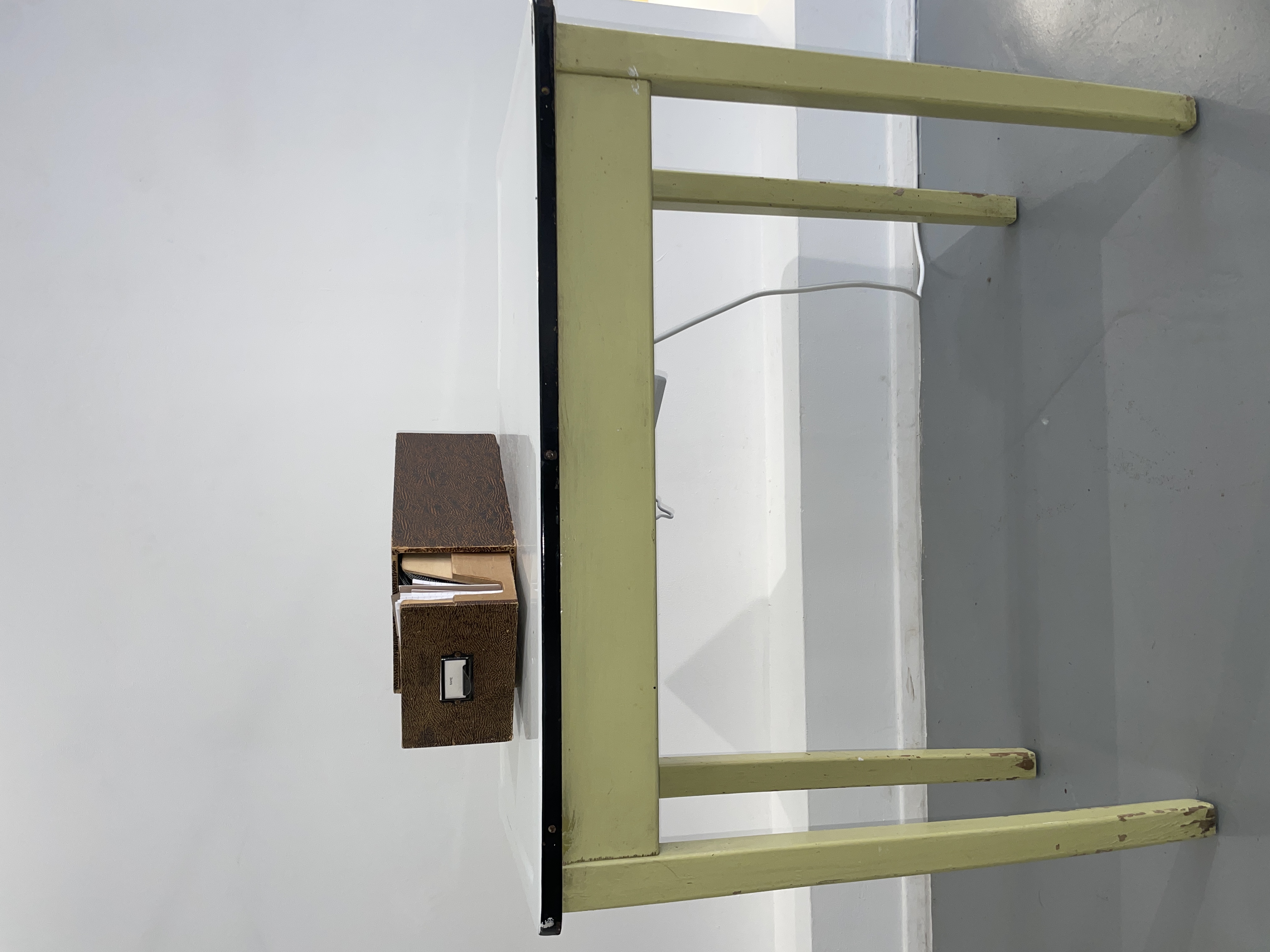
Generative Shipwrecks is an ongoing installation, drawing and performance project by Anno Mitchell. Developed through Arts Council England research funding, the project explores the potentialities of generative technologies as artistic collaborators asking how AI systems, procedural rules and distributed audio networks might reshape the archive as something behavioural, unstable and spatial.
More information is available at Panthalassa
The work begins with the 1967 wreck of the Torrey Canyon off the coast of Cornwall. Rather than reconstructing the disaster as a fixed historical narrative, the project treats it as a connective node within larger systems: global shipping routes, oil extraction, maritime navigation, environmental rupture and geological deep time.
A Behavioural Archive
At the core of Generative Shipwrecks is a custom-built generative framework developed in Python. These systems produce evolving materials including plausible reconstructed ship logs; maritime casualty fragments and incident reports; lat/long-driven wreck sentences drawn from large datasets; oceanic and tectonic sequences tracing ancient seas; and fictional research records from speculative institutions.
The resulting texts sit between documentary realism and speculative reconstruction — a mode of plausible speculative realism. Rather than producing a single narrative, the system continuously recomposes fragments according to rule-based grammars.
The archive does not simply store information; it performs.
Spatial Audio & Distributed Systems
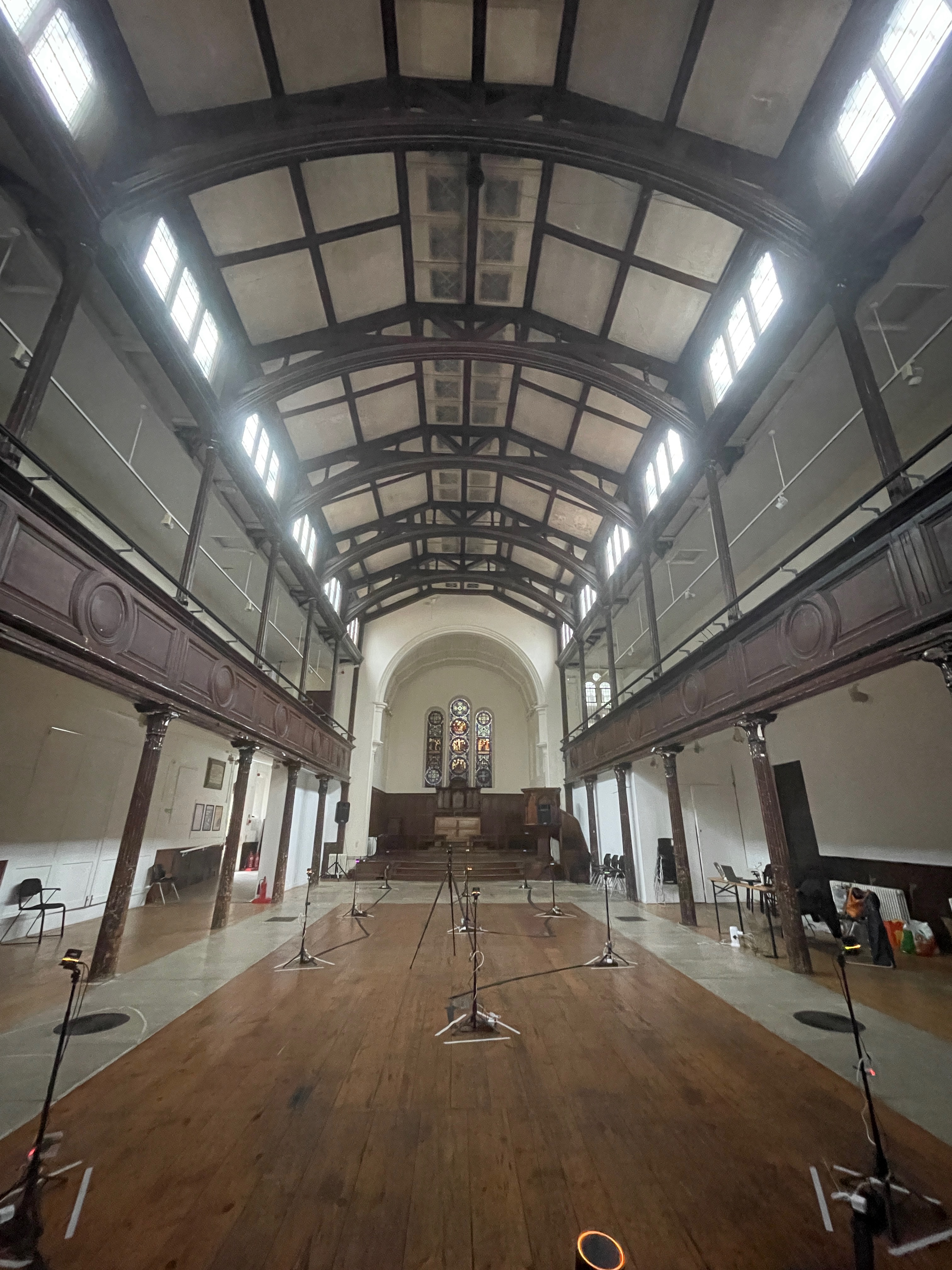
The generated texts are translated into voice and distributed across multi-speaker arrays, often arranged in a 3 x 4 grid. Playback follows probabilistic and spatial rules: fragments move in wave-like sweeps, cluster around imagined coordinates, or surface briefly before dissolving back into noise.
Audio operates in layered streams: noise (waves, sonar, atmospheric residue); durational sets (ancient ocean names, wreck map coordinates); narrative context (immersive but non-linear texts); and sequential narrative blocks (voyage reconstructions, log fragments).
The installation behaves more like a weather system than a linear composition, an acoustic field in which navigation becomes choreography.
Alongside this digital infrastructure, drawing remains central. Procedural mark-making, grid structures and mapping systems translate navigational logic into physical form, exploring deep time as something plotted, layered and rehearsed.
Bristol: Testing the Archive
The Bristol iteration of Generative Shipwrecks functioned as a large-scale research test. This phase examined how generative text, voice synthesis and distributed Raspberry Pi speaker nodes could operate reliably within a public exhibition context.
Here, the emphasis was on system behaviour: how fragments accumulate or disperse; how audiences navigate a spatialised archive; how voice can carry both authority and instability.
Bristol marked a shift from earlier experiments with AI-generated video toward a sustained engagement with sound, performance grammars and embodied computation.
Fabrica: Installation as Encounter
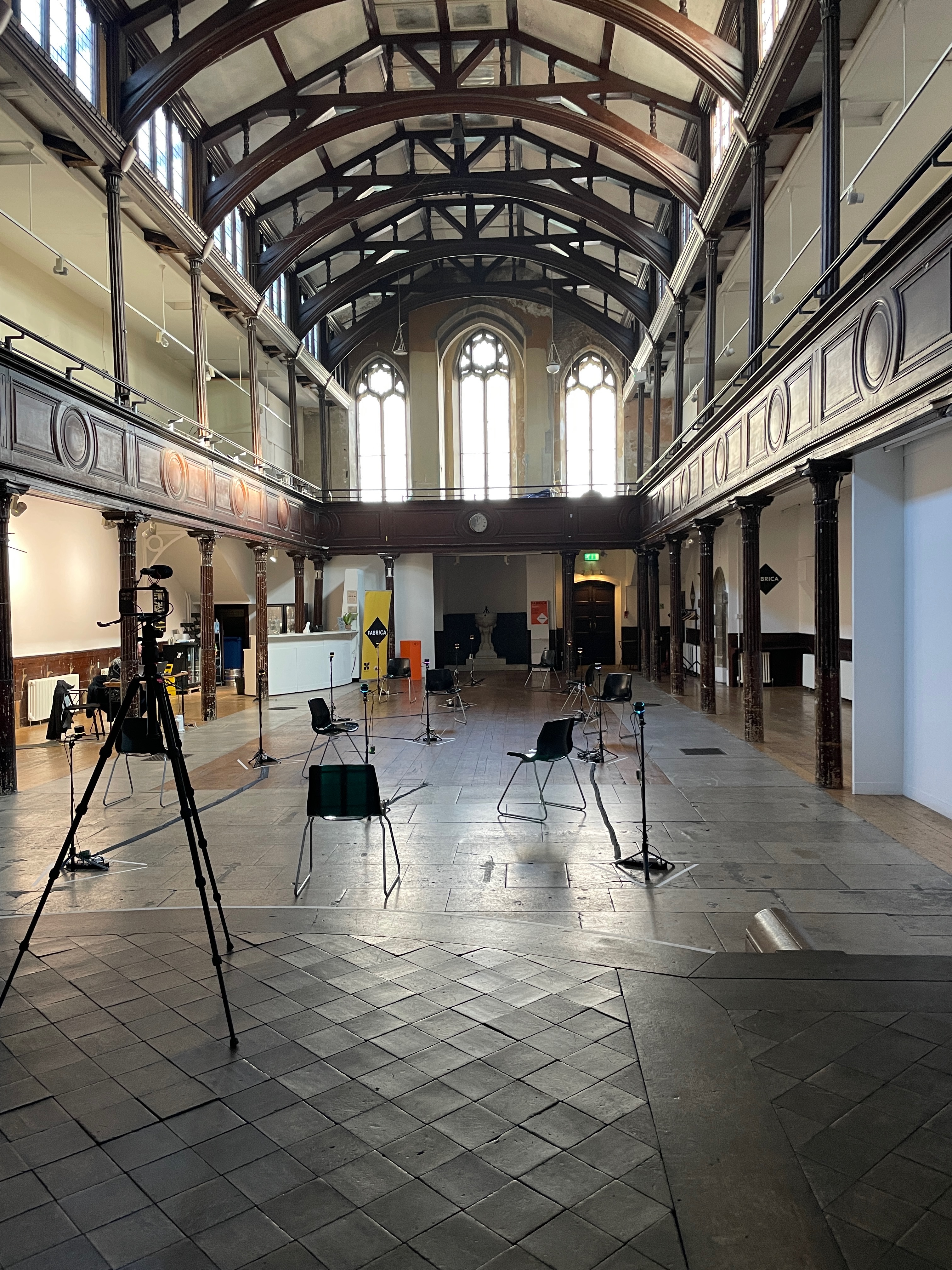
During the Making Space residency at Fabrica in Brighton, Generative Shipwrecks developed into a more immersive installation environment. The work expanded its spatial logic, refining the 12-speaker grid and layering multiple audio streams to create a dense, drifting field of voices.
At Fabrica, the project foregrounded the question: can an archive be encountered as a sentient presence?
The installation invited audiences to inhabit a shifting acoustic territory where coordinates, oil, wreckage and ancient oceans circulated as overlapping temporalities. The sea emerged not as a boundary but as connective tissue — linking trade, extraction, catastrophe and geological duration.
Ongoing Research
Generative Shipwrecks continues to evolve as a long-term research platform. Supported by Arts Council funding and sustained technical development, the project explores generative AI as collaborative system rather than tool; the archive as behavioural intelligence; navigation as a way of thinking across scales; and deep time as experiential rather than abstract.
Across installation, drawing and performance, the work positions generative technology within a wider ecological and historical field — asking not what AI can represent, but how it can reorganise memory, authorship and encounter.